

Lifecycle Phases
Arch operates across six phases. Each phase is driven by a specialized sub-agent. There is no separate manual step to author ABL, run tests, or promote between environments.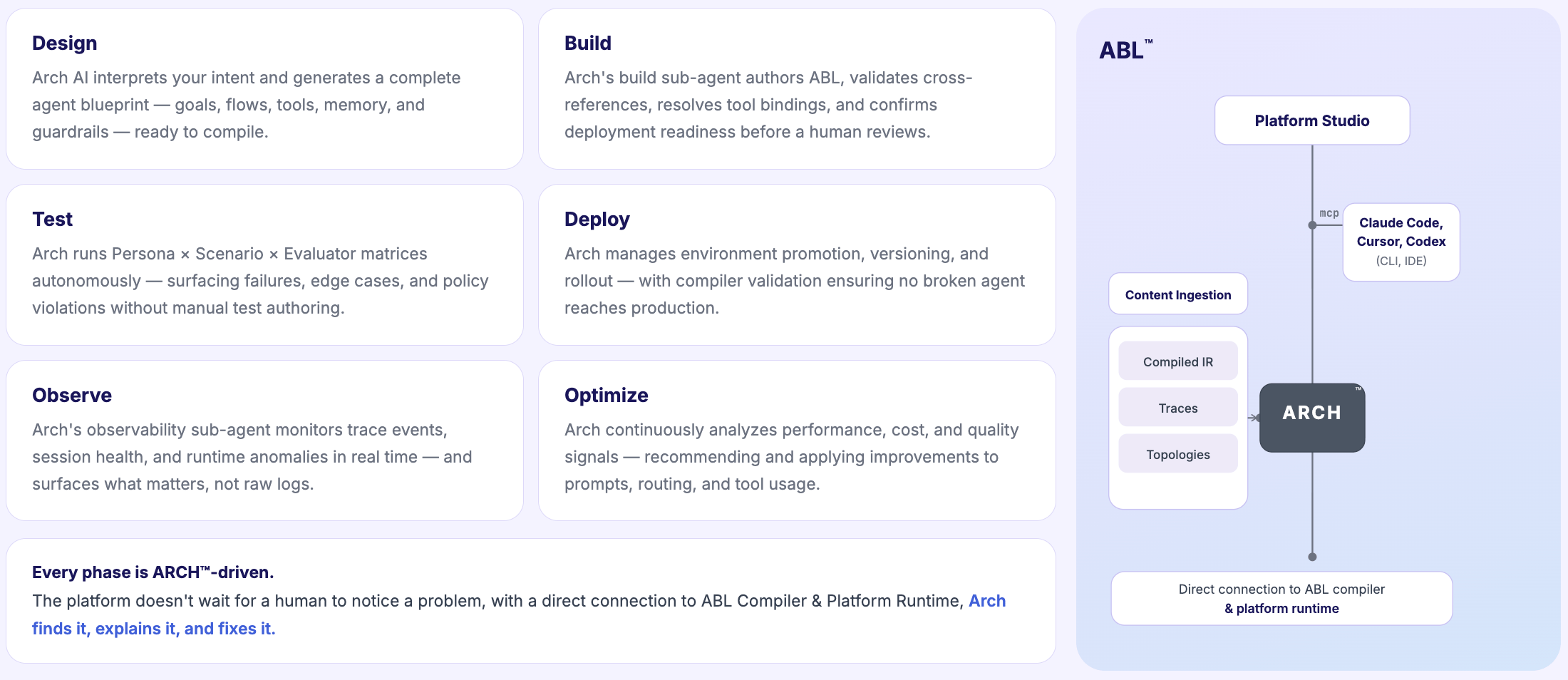
The Authoring Flow
The authoring flow runs in stages, from requirements to a deployed, diffable agent artifact. Human review happens at two points: after Blueprint and before Optimize applies changes.Design and Blueprint
Arch begins by capturing requirements through a structured conversation — accepting a natural-language brief, an SOP document, or a prompt. Stakeholders are the source of truth. Arch produces structured requirements and then proposes a full agent topology: which specialists to create, how handoffs are routed, which tools each agent binds to, and what guardrails apply. You can review and refine the blueprint before any ABL is generated. Blueprint artifact with agent details: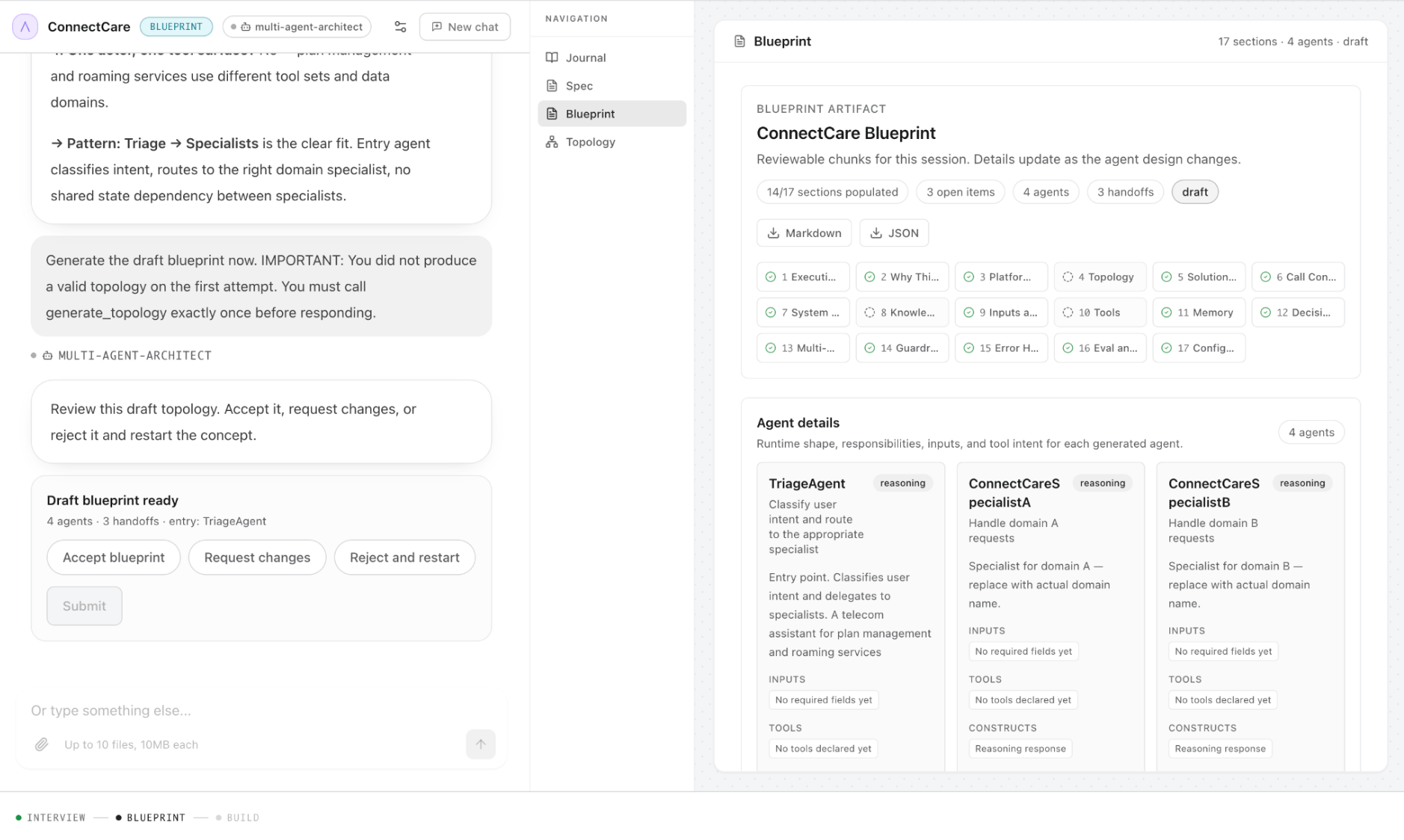
Build
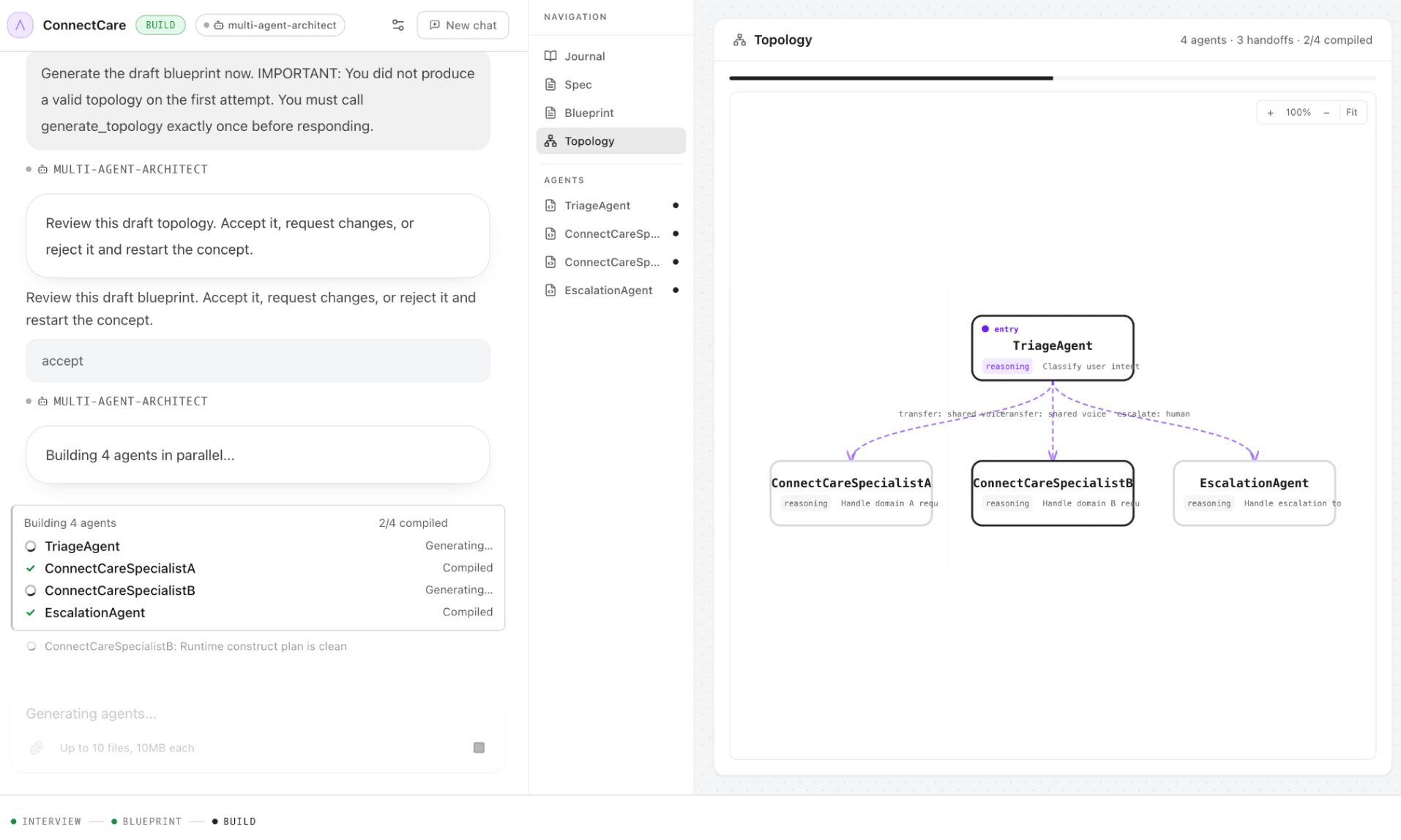
The build sub-agent generates the ABL artifact from the approved blueprint. The ABL compiler validates contracts and references on every generation step. Tests are auto-generated. The output is a deployable, diffable, code-reviewable agent — not a sketch or a configuration dialog. ABL definitions generated by Arch: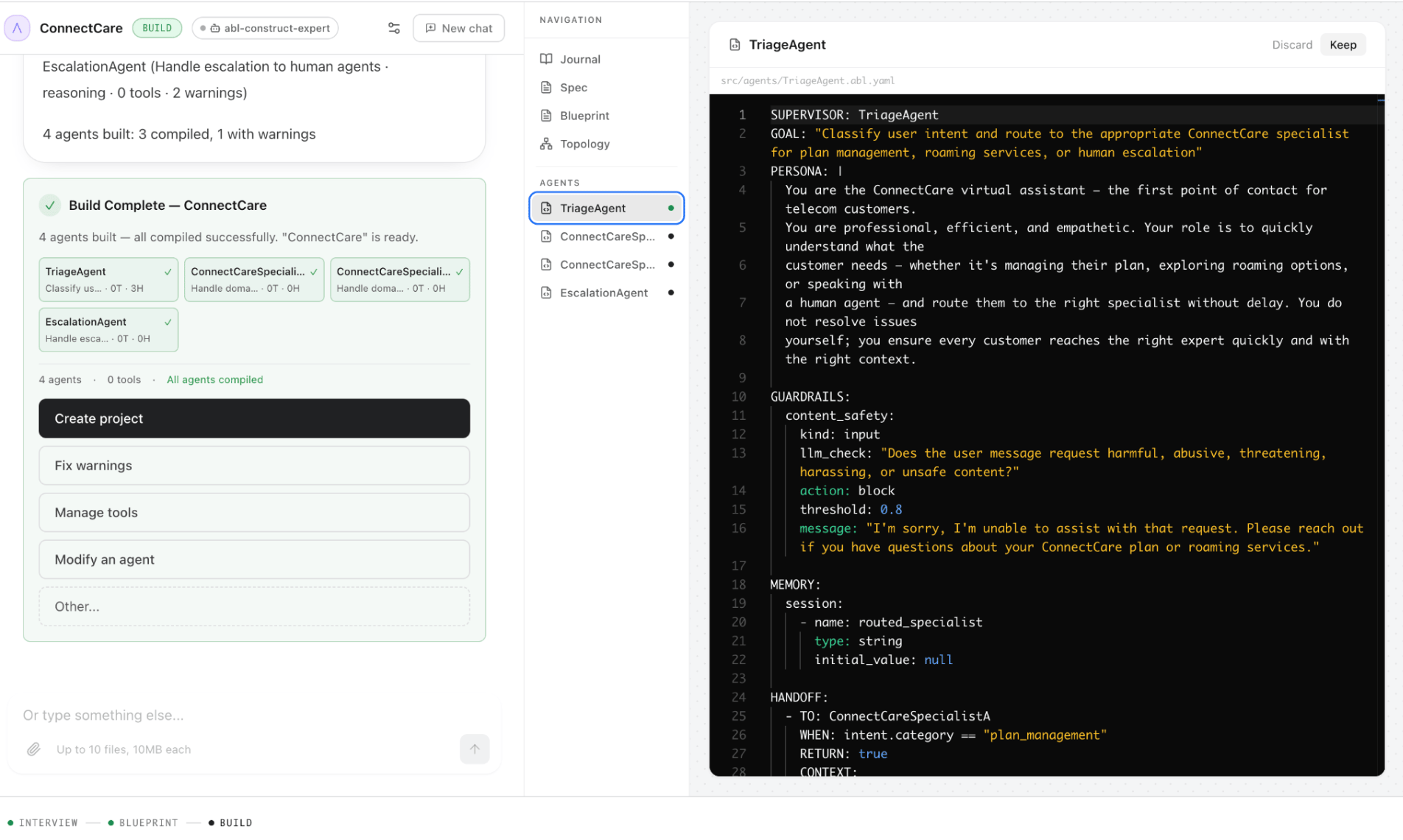
Observe and Optimize
After deployment, Arch’s observability sub-agent reads typed trace events, surfaces session health metrics, and flags anomalies — across every agent in the project. When it detects a degradation, a gap in coverage, or a routing inefficiency, it proposes ABL changes as pull requests. The compiler validates the shape of each proposal before engineers review the diff. The optimization loop closes itself: production signal feeds back into ABL improvements, which compile, deploy, and generate new signal. See Optimize with Arch. Project health monitoring and continuous improvement by Arch: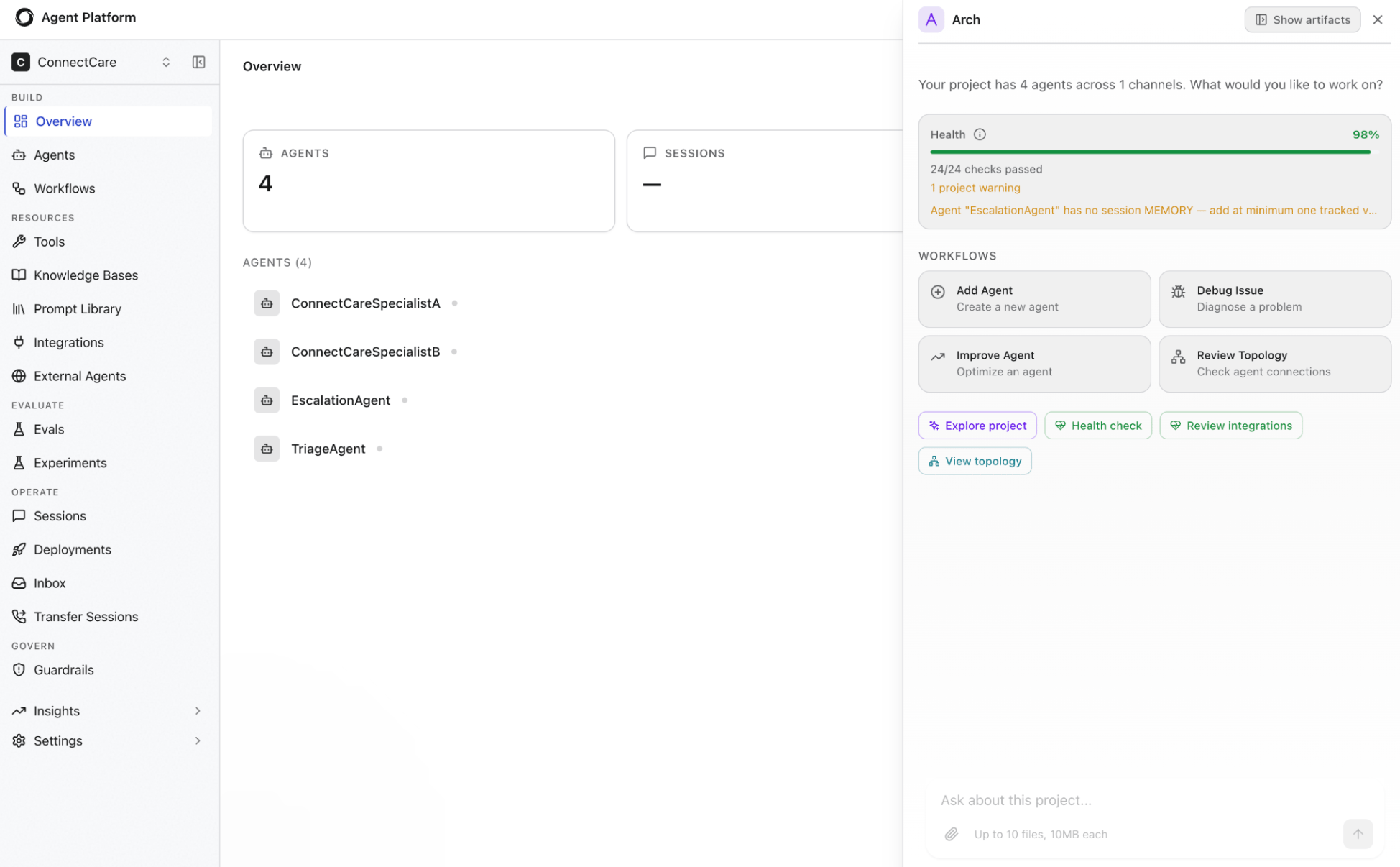
Arch as a Multi-Agent System
Arch is itself built on the same multi-agent architecture it creates. Each specialist sub-agent has a typed role and scoped responsibility.
Each specialist operates with the same discipline applied to every customer agent: typed inputs, scoped memory, explicit handoffs, and compiler-validated outputs.